

When we imagine the open ocean, we picture vibrant coral reefs, vast blue horizons, and thriving aquatic ecosystems.
Because these ecosystems are submerged and far from our daily routines, we often fail to witness the severe, ongoing crisis unfolding beneath the surface.
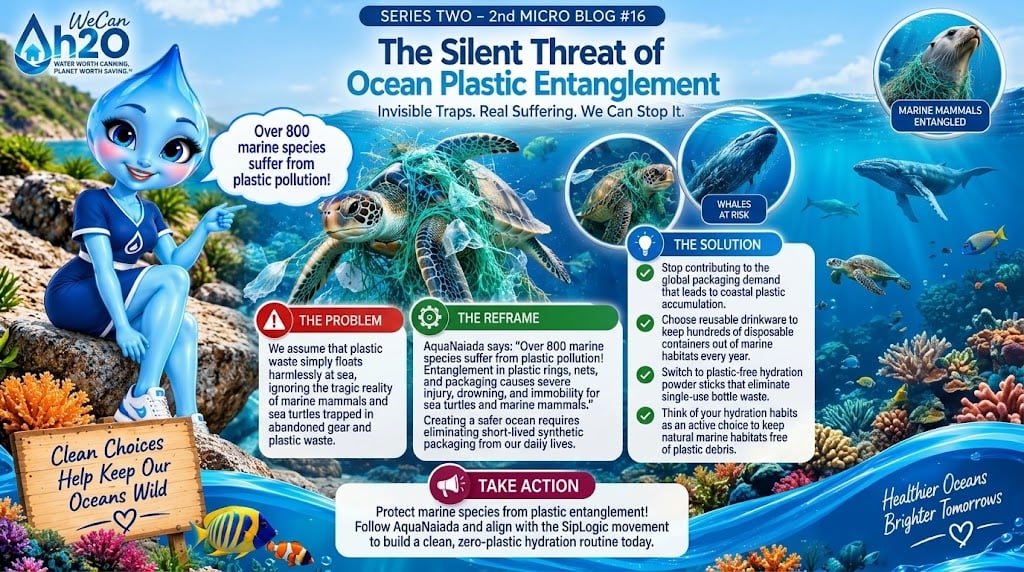
However, scientific research shows that plastic pollution has penetrated every depth of the global ocean—from surface waters to the deepest trench on Earth. Marine life of all sizes, from microscopic zooplankton to massive baleen whales, faces an unprecedented survival threat driven by three devastating pathways: physical entanglement, dietary ingestion, and chemical toxicity.
AquaNaiada says: “The ocean is not a garbage dump, but millions of tons of plastic enter it every year. Marine animals don’t just swim alongside our plastic waste—they are entangled by it, starving from it, and absorbing its toxins every single day!”
To understand the profound impact of marine plastic debris, we must look closely at how synthetic waste affects aquatic life:
- Entanglement and Physical Trauma: According to comprehensive marine data synthesized by the United Nations Environment Programmed (UNEP) and published in Frontiers in Marine Science, over 800 marine species are currently affected by plastic pollution. Abandoned fishing gear, plastic rings, and discarded packaging cause severe physical trauma, strangulation, and drowning in sea turtles, marine mammals, and seabirds.
- Ingestion, Malnutrition, and Intestinal Blockages: A seminal global study published in PNAS (Proceedings of the National Academy of Sciences) estimates that 90% of all seabirds alive today have ingested plastic fragments. Marine species mistake floating plastic bags for jellyfish or filter-feed microplastics out of the water column. The ingested plastic fills their stomachs without supplying nutrition, leading to false satiation, internal gut lacerations, and eventual starvation.
- Chemical Bioaccumulation Across Food Webs: Research published in Nature Communications demonstrates that microplastics act as chemical sponges, absorbing hydrophobic persistent organic pollutants (POPs) from seawater. When marine organisms swallow these plastic particles, toxic additives like phthalates and heavy metals leach directly into their tissues, bioaccumulating up the marine food chain.
When we combine these research findings, the conclusion is undeniable: single-use plastic packaging is actively collapsing the health of our global marine ecosystems.
AquaNaiada says: “We can’t rescue marine life with ocean cleanups alone while continuing to dump millions of plastic bottles into the system every hour. To save our sea life, we must cut off plastic production at the source!”
This presents an urgent call to action for eco-conscious consumers. Continuing to purchase disposable plastic bottles and single-use packaging feeds the exact pipeline that puts marine species at risk every day.
Real ocean conservation requires eliminating single-use plastic packaging before it ever reaches a waterway.
Why Follow This Matters: We cannot protect marine life while relying on single-use plastic containers. Through SipLogic, and with AquaNaiada’s guidance, we eliminate single-use plastic beverage packaging entirely. By pairing our compact, plastic-free hydration powder sticks with a durable glass or stainless-steel reusable bottle, you help stop the flow of plastic waste into our shared oceans.
AquaNaiada says: “Protect our marine animals with every sip! Ditch single-use plastic bottles, hydrate with plastic-free powder sticks, and keep synthetic trash out of our oceans!”
Simple Shift: Small daily choices create massive waves of change. Transitioning to lightweight powder concentrates in durable, non-plastic containers keeps single-use packaging out of the ocean and gives marine life a chance to thrive.
Call to Action
Action Step: Stand up for marine life today. Eliminate single-use plastic beverage bottles from your routine and switch to a high-grade glass or stainless-steel reusable bottle paired with SipLogic plastic-free hydration sticks to reduce your personal ocean plastic footprint.
Core Principle: Marine conservation requires stopping land-based single-use plastic pollution before it enters coastal environments.
Follow us for more solutions: Join the SipLogic movement. Follow AquaNaiada for clear breakdowns of environmental metrics, low-waste lifestyle strategies, and zero-plastic hydration tips.


Leave a Reply