

When we think about tackling the global plastic waste crisis, the most common solution recommended to consumers is simple: place your used plastic items into the recycling bin.
Because blue bins and chase-arrow symbols are everywhere, we tend to believe that diligent post-consumer recycling can successfully neutralize the environmental footprint of our plastic packaging.
However, scientific data and global waste management analyses reveal that recycling alone is mathematically incapable of solving plastic pollution. Mechanical recycling is limited by chemical degradation, severe economic barriers, and skyrocketing virgin polymer production. Viewing recycling as a cure-all creates a false sense of security while ignoring the need for upstream production cuts and plastic-free alternatives.
AquaNaiada says: “Recycling is a helpful downstream tool, but it isn’t a silver bullet! You can’t recycle your way out of a crisis when new plastic is being produced faster than waste systems can ever collect it.”
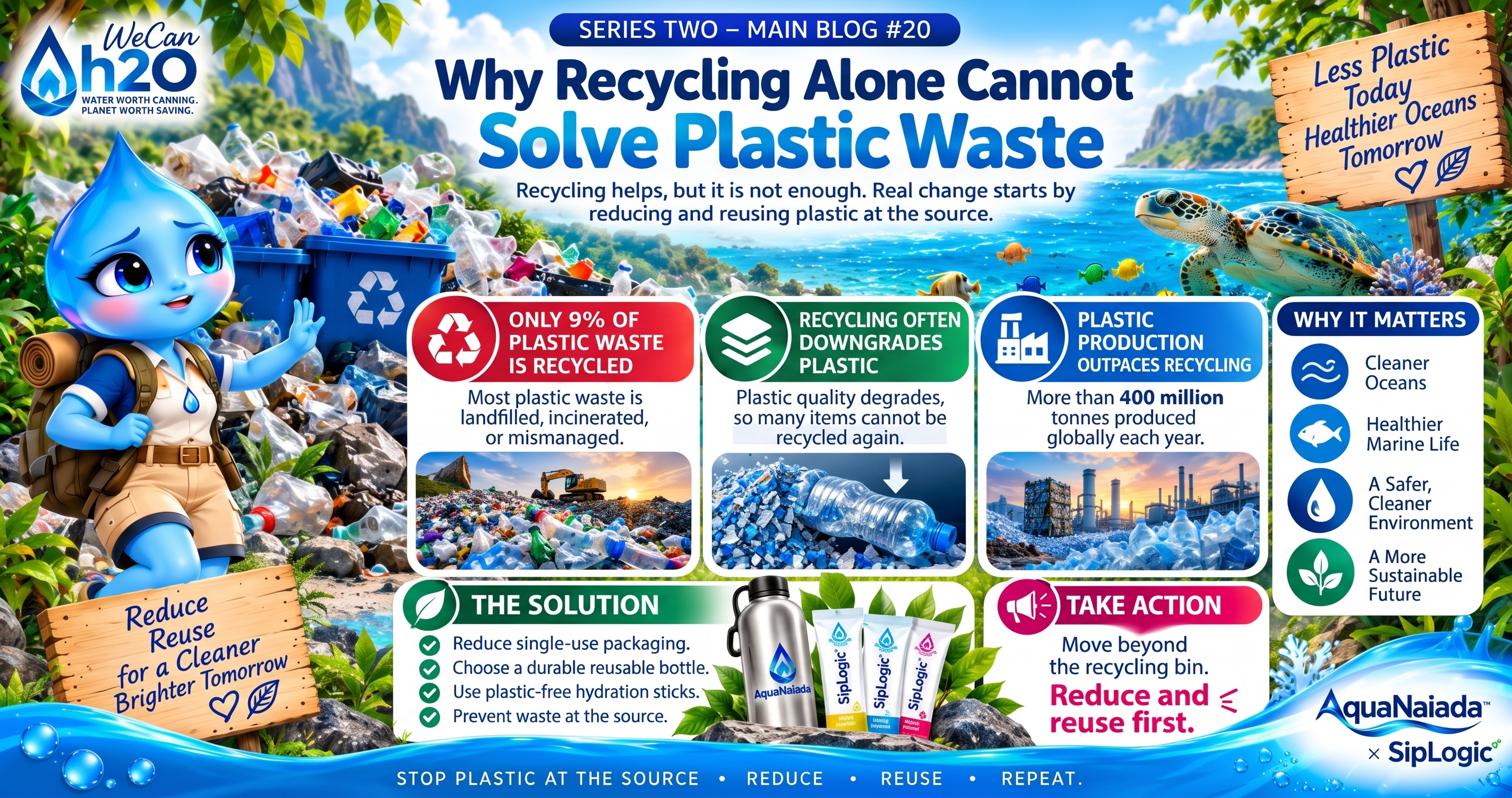
To understand why recycling cannot solve the plastic waste crisis on its own, we must examine three structural limitations:
- Abysmal Global Recycling Rates: According to comprehensive data from the Organisation for Economic Co-operation and Development (OECD), only 9% of global plastic waste is successfully recycled. Roughly 19% is incinerated, 22% is mismanaged directly into the environment, and nearly half ends up in landfills.
- Downcycling and Polymer Degradation: Unlike glass or aluminum, which can be melted and remolded indefinitely without quality loss, mechanical plastic recycling degrades polymer chains. Most recycled plastic is “downcycled” into lower-grade products (such as carpet fibers, park benches, or road fill) that cannot be recycled a second time and eventually enter landfills anyway.
- The Production Outpaces Infrastructure Gap: Research published by the United Nations Environment Programme (UNEP) and Our World in Data highlights that annual global plastic production has soared past 400 million tonnes. Virgin petroleum resin remains far cheaper to produce than collecting, sorting, and washing post-consumer recycled plastic, leaving recycling infrastructure perpetually overwhelmed.
When we combine these factors, the conclusion is clear: post-consumer recycling cannot fix a system that continues to flood the market with cheap single-use plastic.
AquaNaiada says: “Relying solely on the recycling bin is like trying to empty a flooded room with a teaspoon while the tap is running on full blast. True sustainability requires turning off the tap at the source!”
This presents a critical reality check for conscious shoppers. Continuing to purchase single-use plastic packaging under the assumption that it will be cleanly recycled perpetuates a system that leaks millions of tons of waste into ecosystems every year.
Real waste prevention requires reducing demand for single-use packaging and adopting zero-plastic refill habits right at the source.
Why Follow This Matters: We cannot protect our planet by relying on downstream waste management alone. Through SipLogic, and with AquaLia’s guidance, we eliminate the need for disposable plastic packaging entirely. By switching to compact, plastic-free hydration powder sticks paired with a durable glass or stainless-steel reusable bottle, you help stop synthetic packaging waste before it is ever created.
AquaNaiada says: “Skip the recycling guessing game! Ditch single-use plastic bottles, hydrate with compact powder sticks in a reusable bottle, and stop plastic waste before it starts!”
Simple Shift: True climate action means prioritizing reduction and reuse over recycling. Transitioning to lightweight powder concentrates in durable, non-plastic containers eliminates single-use packaging and creates a genuinely zero-waste hydration routine.
Call to Action
Action Step: Move beyond the recycling bin today. Audit your routine to eliminate single-use beverage containers, and switch to a durable glass or stainless-steel reusable bottle paired with SipLogic plastic-free hydration sticks to cut your plastic waste at the source.
Core Principle: Waste reduction requires stopping single-use packaging production rather than relying on downstream recycling processes.
Follow us for more solutions: Join the SipLogic movement. Follow AquaNaiada for clear breakdowns of environmental metrics, low-waste lifestyle strategies, and zero-plastic hydration tips.


Leave a Reply